Most buffet equipment is chosen for function and judged on performance. The handi is chosen for recognition. The moment a guest sees that rounded silhouette on a banquet line, they know what kind of food is coming before they read a single label — and that single piece of visual shorthand is why hotels, wedding caterers and restaurants across Pakistan keep specifying handi-style serveware for biryani, haleem, karahi and slow-cooked curries, long after flatter, more generic chafing formats would do the job just as efficiently.
Why the Handi Shape Still Earns Its Place
A handi is not simply a rounder pot. The shape is tied directly to how South Asian dishes are cooked and expected to look: biryani layered and rested in a deep vessel, haleem slow-simmered until it thickens, karahi finished and presented in the same rounded body it was cooked in. Serving these dishes from a flat rectangular pan undersells them — the presentation reads as generic catering rather than as the dish a guest actually ordered.
This matters most at exactly the events where presentation is being judged alongside the food: wedding banquets, cultural functions, and any hotel buffet positioning itself as a South Asian or Pakistani dining destination rather than an international one. The handi format signals authenticity before the first spoon goes in.
Copper Handi or Stainless Handi-Shaped Chafing Dish?
The first decision is material, and it is really a decision about where in the service the piece sits.
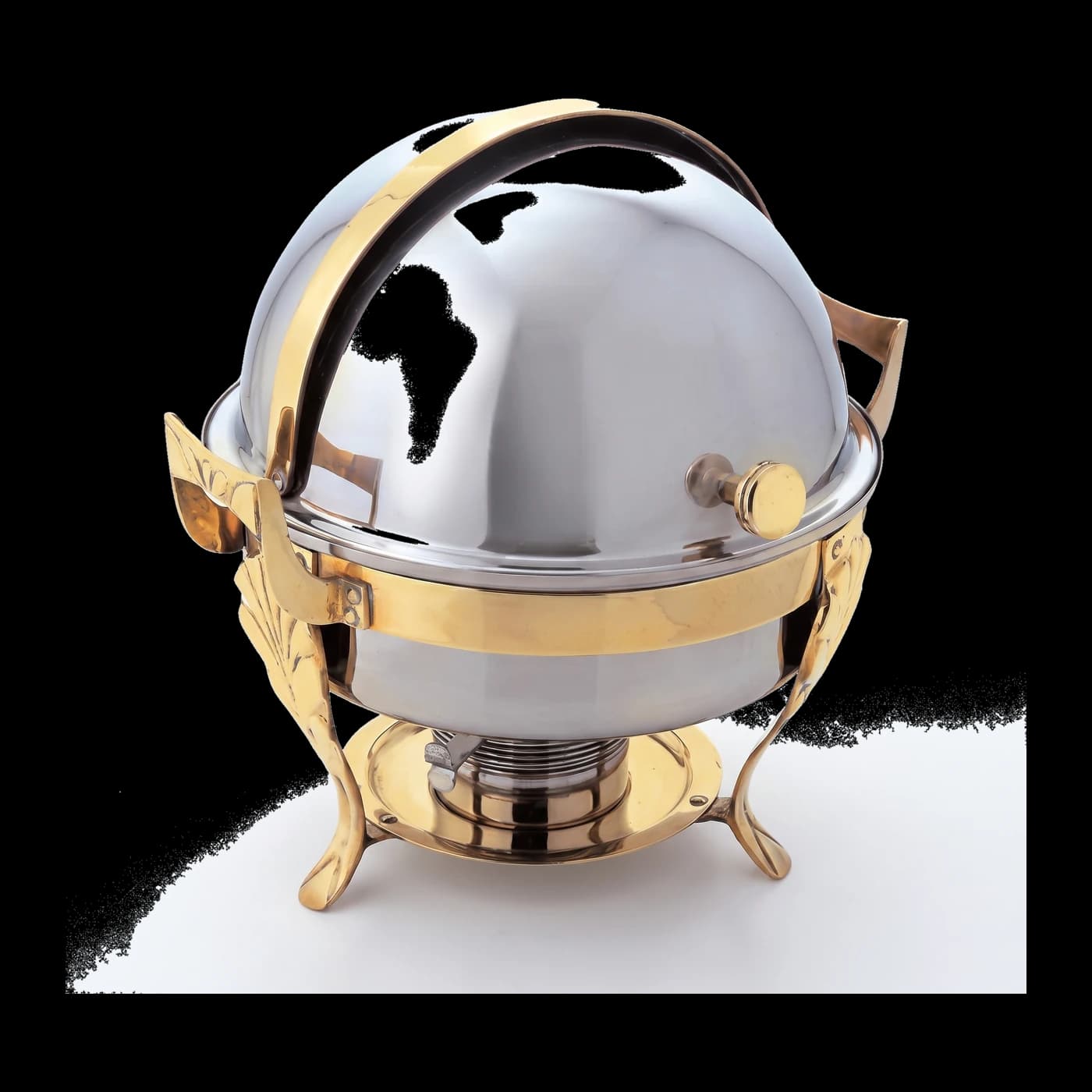
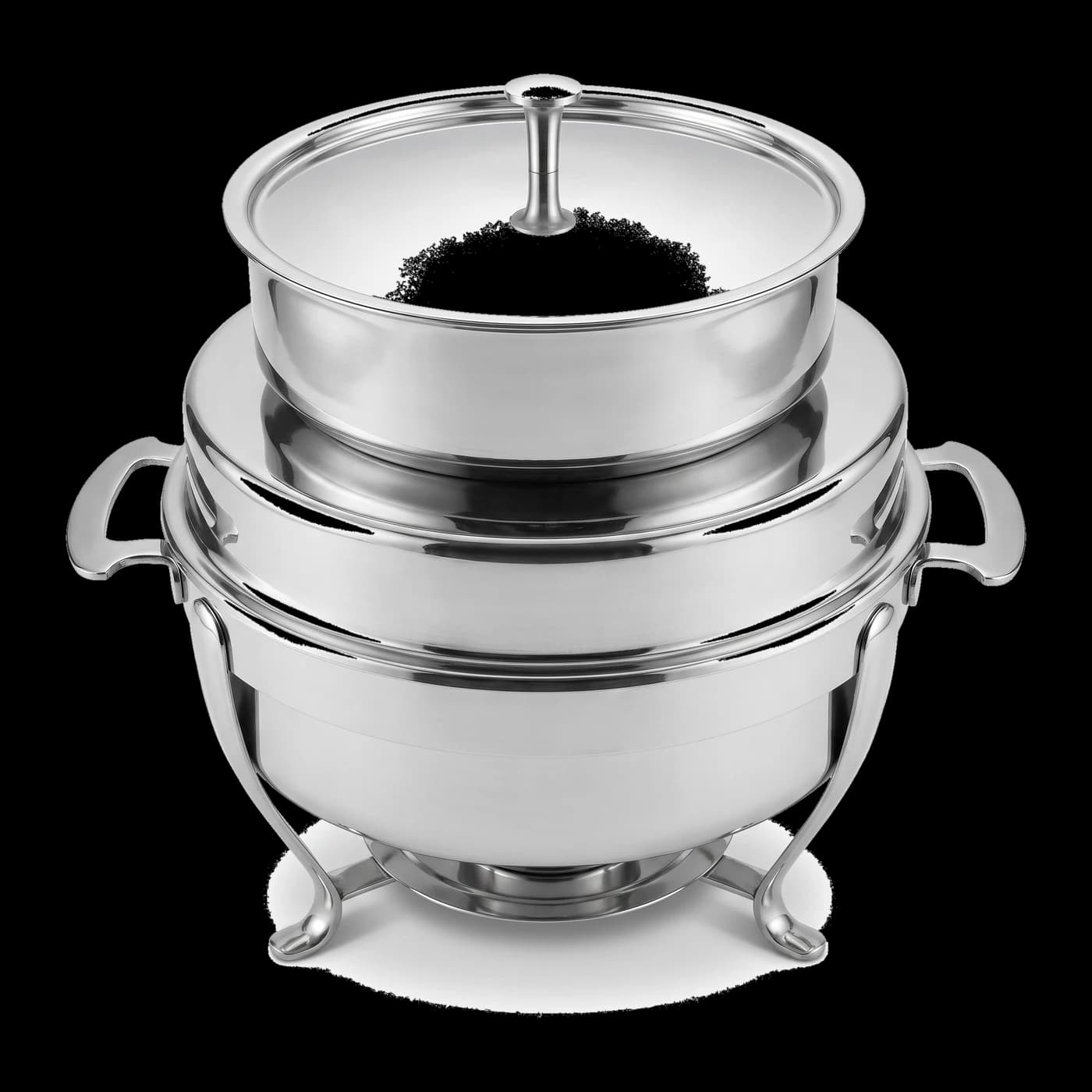
Our Handi Shaped Chafing Dish and Handi Chafing Dish are built in stainless steel on a brass stand, with a sliding lid and a standard fuel burner underneath. These are self-service buffet pieces first — built to hold temperature through a long sitting, stand up to being refilled mid-service, and clean easily between shifts. They give you the recognisable handi silhouette without asking a buffet line to carry copper maintenance.
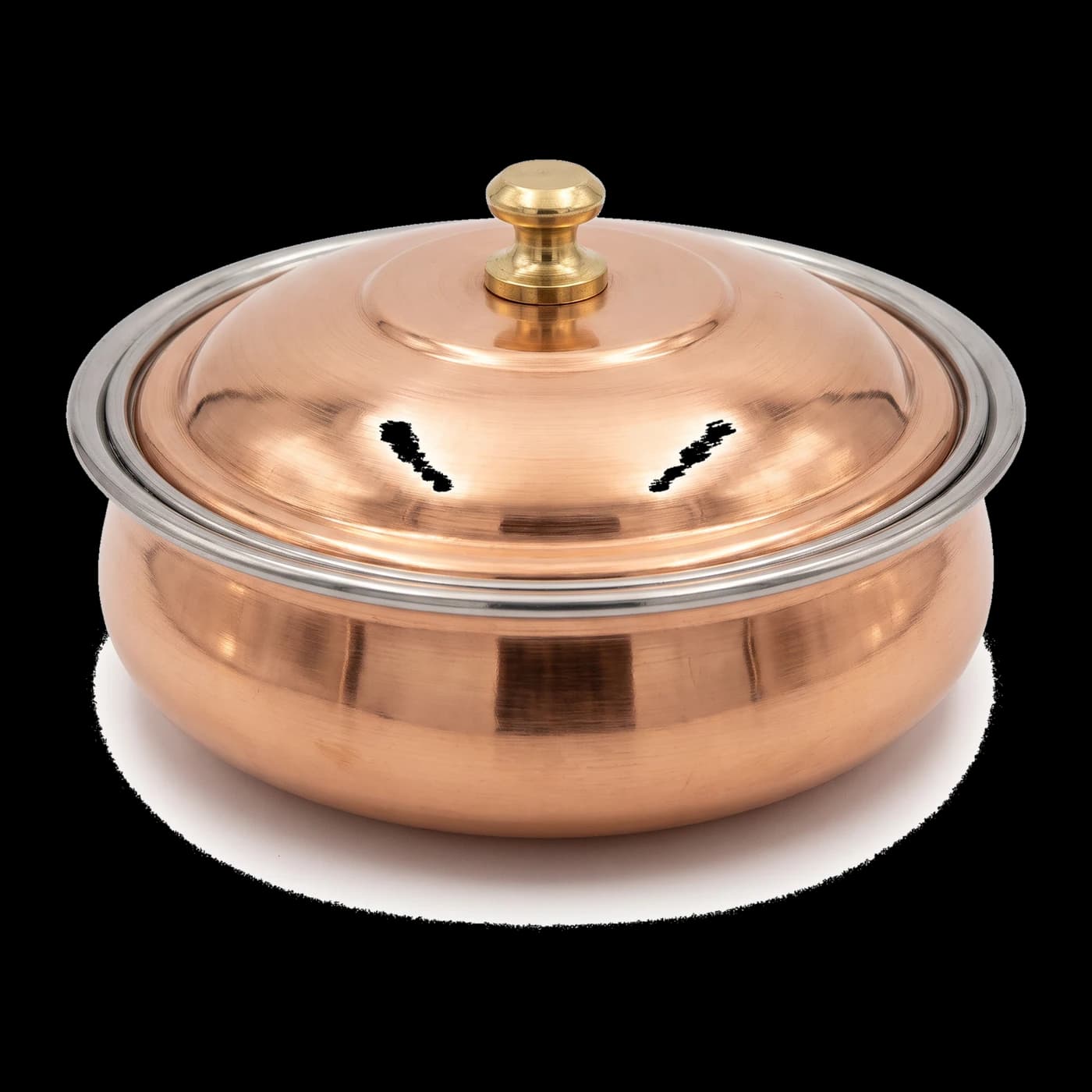
A copper handi is a different proposition. It is heavier to justify on a long self-service line and better suited to a station where it is seen as much as it is used — a carving station, a live-cooking counter, or a banquet table where the vessel itself is part of the table setting rather than hidden behind a sneeze guard. If you are still weighing the two materials in general, our copper versus stainless steel comparison covers the durability and cost trade-offs in full; this is simply where that decision lands specifically for handi-format serving.
Hand-Crafted Copper: What You Are Actually Paying For
Within copper handis, there is a further distinction worth understanding before you compare quotes. Our Handmade Copper Handi and Handcrafted Copper Handi are individually shaped and finished by hand, with surface carving and hammer marks that mean no two pieces are identical. That is not a manufacturing inconsistency to tolerate — it is the point. A heritage restaurant or a hotel building a story around traditional Pakistani craft gets more from a handi that visibly carries the maker's hand than from a uniform, machine-finished alternative.
Both are lined internally with stainless steel, so the copper you see is never in direct contact with food — the exterior does the presentation work while the interior does the food-safety work. Each piece is sold on that basis rather than as a batch-identical product, so expect some variation in hammer pattern and finish between units in the same order.
Keeping Handi Dishes at Temperature
Presentation only matters if the food is still hot when it reaches the plate, and this is where the standard chafing dish rules apply just as firmly to handi-shaped pieces as to any other buffet vessel: hot-holding needs a genuine heat source, not a vessel that is simply cooling at a slower rate. The food-safety threshold generally used for hot-held food is above 63 °C, and a dish sitting below that for an extended buffet sitting is a food-safety question as much as a quality one.
Our Copper Handi with Heating Stand pairs the copper body with a brass-accented stand built around a spirit burner, which keeps a table-side or carving-station handi at temperature without running a power cable across a banquet floor — useful at outdoor weddings and marquee functions where an electrical point is rarely close to the serving table. The stainless handi-shaped chafing dishes work on the same burner-fuel logic used across our standard chafing range, which our chafing dish guide covers in more detail if you are specifying fuel and burner quantities across a full buffet line.
Sizing for Wedding and Banquet Volumes
Wedding and banquet catering in Pakistan runs on volume in a way a daily hotel buffet does not — a single function can mean several hundred covers served from a handful of stations over two or three hours. Two planning points matter more here than on a standard buffet line.
- Plan refill cycles, not just capacity. A single large handi that needs refilling mid-service creates a visible gap on a banquet table at exactly the wrong moment. Running two mid-sized handis per dish, refreshed in rotation from the kitchen, keeps the table looking full throughout.
- Match the handi to the dish, not the other way round. Biryani holds its texture better in a wider, shallower handi that does not compress the lower layers under its own weight; haleem and daal-based dishes do better in a deeper vessel that limits surface-area heat loss between stirs.
Pairing Handis with Serving Pots for Table-Side Presentation
Where service moves beyond the buffet line to table-side presentation — a banquet suite plating curries in front of guests, or a fine-dining restaurant doing a tableside reveal — our Copper Serving Pots extend the same visual language in a smaller, individually carried format. They pair naturally with a copper handi used as the main buffet or carving-station centrepiece, so a property can run a consistent copper presentation from the main serving table right down to what is placed in front of each guest.
If you are specifying a full copper station rather than a single piece, our copper hotelware range covers the rest of the matching pieces, and our copper hotelware care guide is worth reading before the first service — copper on a wedding or banquet rotation gets handled more, and tarnishes faster, than copper sitting on a daily hotel line.
Where the Handi Sits in a Wider Buffet Plan
A handi, in either material, is rarely the only hot-holding piece on a line — it is usually one strong centrepiece among several chafing dishes handling the rest of the menu. Our hotel buffet setup guide covers how to plan station layout and equipment quantities across a full buffet, which is the right next step once the handi piece itself is decided.
Buying Direct from a Manufacturer
Hand-crafted copper pieces in particular benefit from being ordered directly from the maker rather than through a generic retail range — custom sizing, engraving and finish stay within reach, and a property that orders a handi today can reorder a matching piece for a future banquet without a visible mismatch on the table. Lotus Metal Works has manufactured handcrafted handi and copper hotelware in Pakistan since 1951, supplying hotels, restaurants and banqueting halls across the country.
Planning handi-style service for a banquet or buffet?
Tell us your menu and cover count, and we’ll suggest the right handi format, size and finish — bulk pricing available.
Get in Touch