Two buffets can serve identical food and read completely differently to a guest walking in. The difference is almost never the cooking — it is what the room does with height, movement and material before anyone has taken a plate. A flat line of chafing dishes at one level looks like a canteen; the same dishes broken up with a revolving stand and a tiered display look like an event.
Why Flat Buffets Read as Plain
The eye reads a buffet line the way it reads a shelf: everything at one height blurs into a single visual band, and a guest scanning the room takes in the whole line as one impression rather than noticing individual dishes. Breaking that band — with a raised stand, a rotating centrepiece, or a tiered display at one end of the line — gives the eye somewhere to land, and that single focal point does more for perceived quality than an extra dish on the menu.
Revolving Stands for Shared Service
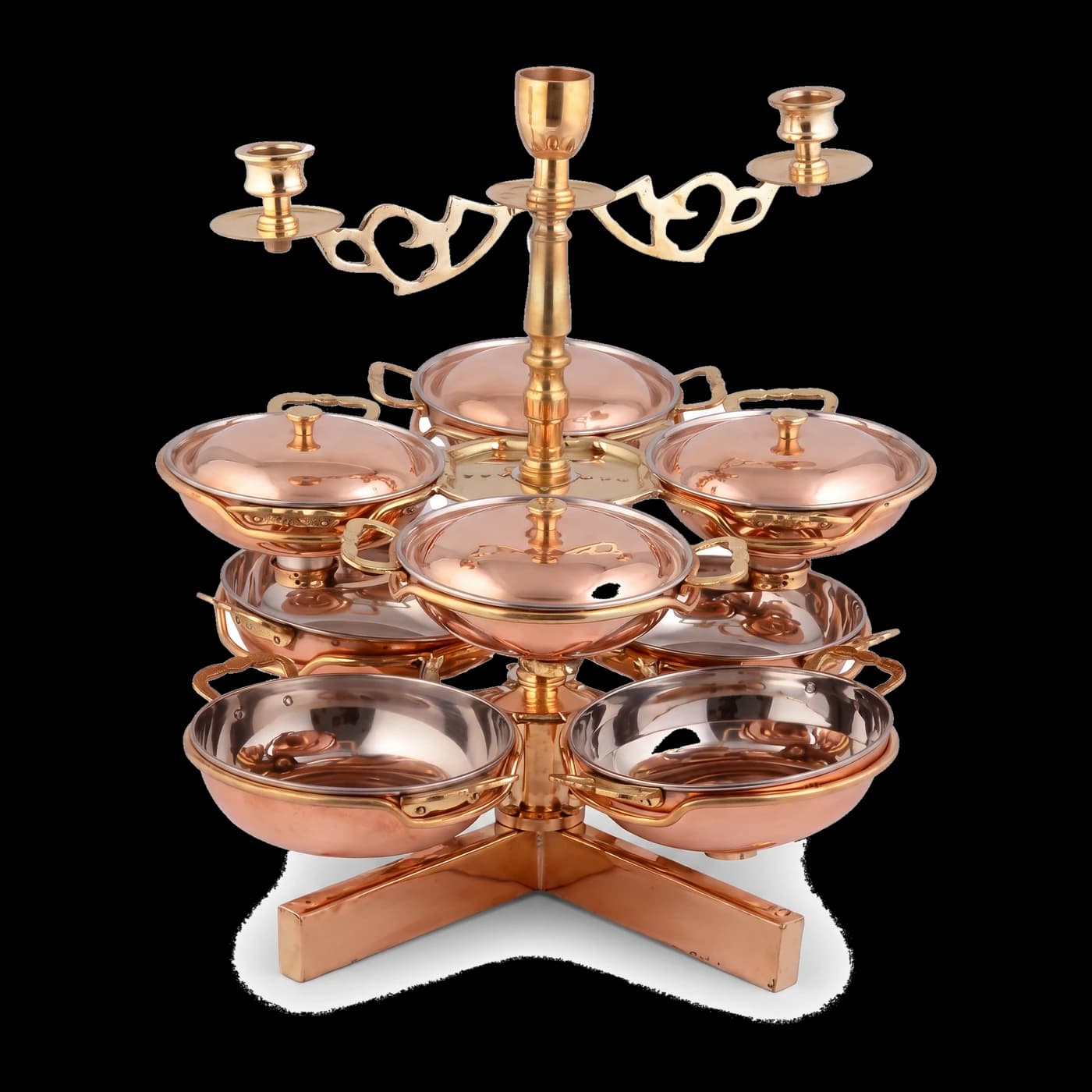
Our Copper Revolving Serving Stand holds eight individual bowls around a rotating copper-and-brass frame, so every diner at a table can reach every accompaniment by turning the stand rather than passing dishes hand to hand. This format suits three settings particularly well:
- Mezze and sharing-plate service, where several small accompaniments are meant to circulate around a table rather than sit in front of one diner.
- South Asian banquet layouts, where multiple chutneys, raitas and small sides traditionally accompany a main course and are served family-style.
- Wedding and banquet tables, where the stand itself becomes a centrepiece — the copper and brass construction is deliberately built to be looked at, not just used.
A revolving stand only works if it turns smoothly under a full load of eight loaded bowls — a stiff or wobbling mechanism undoes the presentation instantly, so this is a piece worth specifying properly rather than buying on price alone.
Tiered Stands for Pastry and Dessert
Our Pastry & Cookie Serving Stand takes the opposite approach to the revolving stand — instead of spreading dishes horizontally, it stacks them vertically, which solves a different problem: fitting a wide variety of small items into a compact footprint on a crowded dessert table. Multi-tier display is standard for:
- Afternoon tea service, where the tiered format is practically expected by guests.
- Wedding dessert tables, where vertical stacking lets a small table display a large variety of petit fours and confections.
- Hotel pastry stations and bakery counters, where display density directly affects how full and generous the counter looks.
Height does the same job here that rotation does on the revolving stand: it gives the display a shape the eye follows, rather than a flat spread it skims over.
Trays: The Piece a Guest Actually Touches
Stands are seen; trays are handled. Our Stainless Steel Serving Tray with ornate copper handles is carried through a dining room repeatedly during a single service, which makes it the one piece of buffet equipment guests come into direct contact with rather than simply looking at across a room. That changes what matters in the specification:
- Handle design should be engraved or cast rather than simply welded flush, both for grip and because a tray is held at close range far more than it is viewed from a distance.
- Border rigidity matters more than on a stationary piece — a tray that flexes under a full load is unpleasant to carry and risks a spill.
- Finish consistency across a set of trays is more noticeable than on stands, because trays are frequently seen side by side on a trolley or sideboard between uses.
A Covered Piece for the Formal End of Service
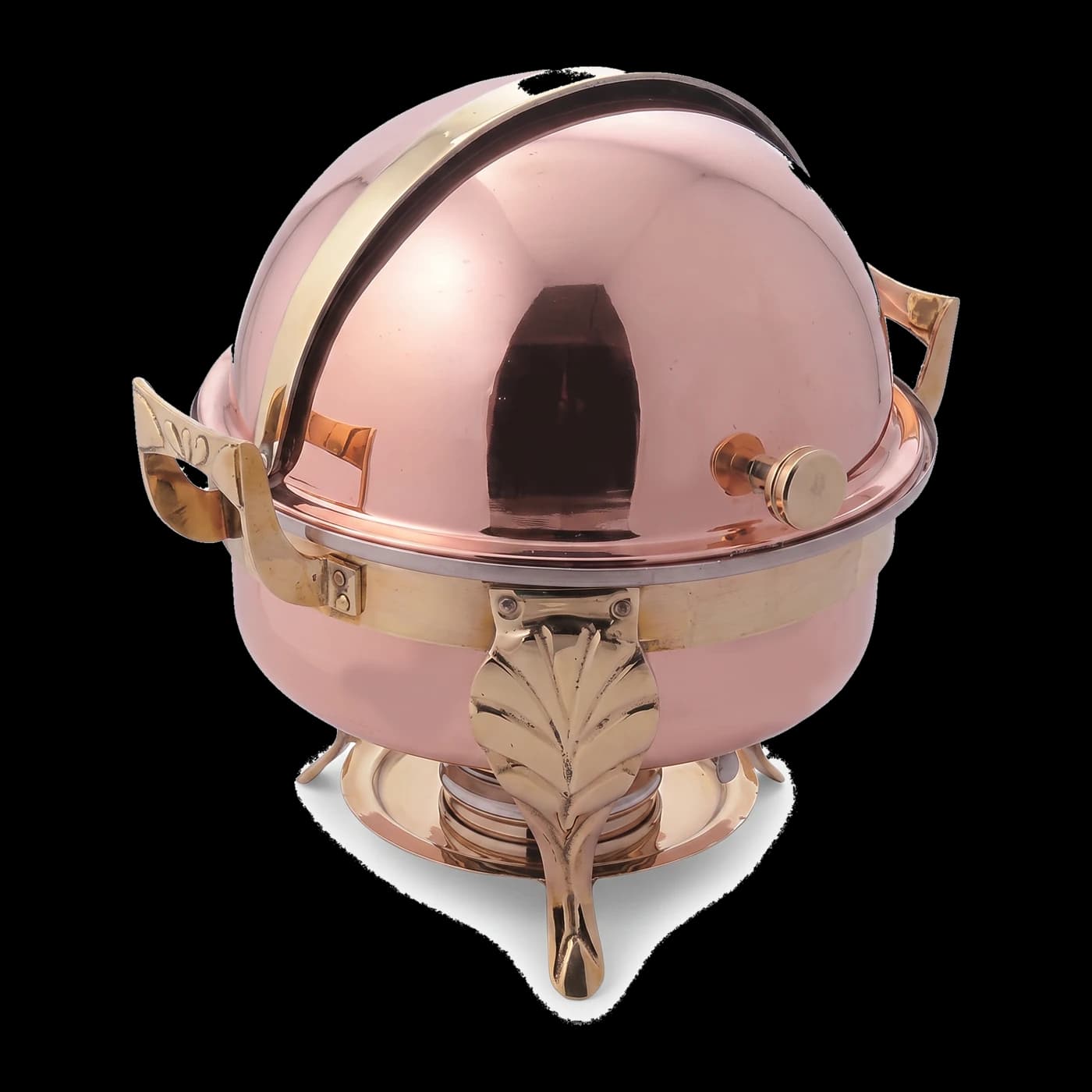
Where a buffet gives way to plated or à la carte service, our Covered Entrée Dish takes the presentation logic one step further: a domed cover lifted by a brass finial conceals the dish until the moment of service, which is a different kind of display altogether — the reveal itself is the presentation, rather than the dish being visible throughout. It belongs on private dining tables and banquet covers where that moment matters, rather than on a self-service buffet line.
Building a Display Hierarchy, Not a Shopping List
The most common mistake we see is buying display pieces individually, as needs come up, rather than planning a hierarchy across the room. A stronger approach is to decide in advance which single piece is the visual anchor of each buffet section — the revolving stand for the accompaniments table, the tiered stand for dessert, a single striking chafing dish for the main course line — and let the remaining pieces sit quietly beneath that anchor rather than competing with it. A room with five equally striking pieces reads as busier and less considered than a room with one clear focal point per section.
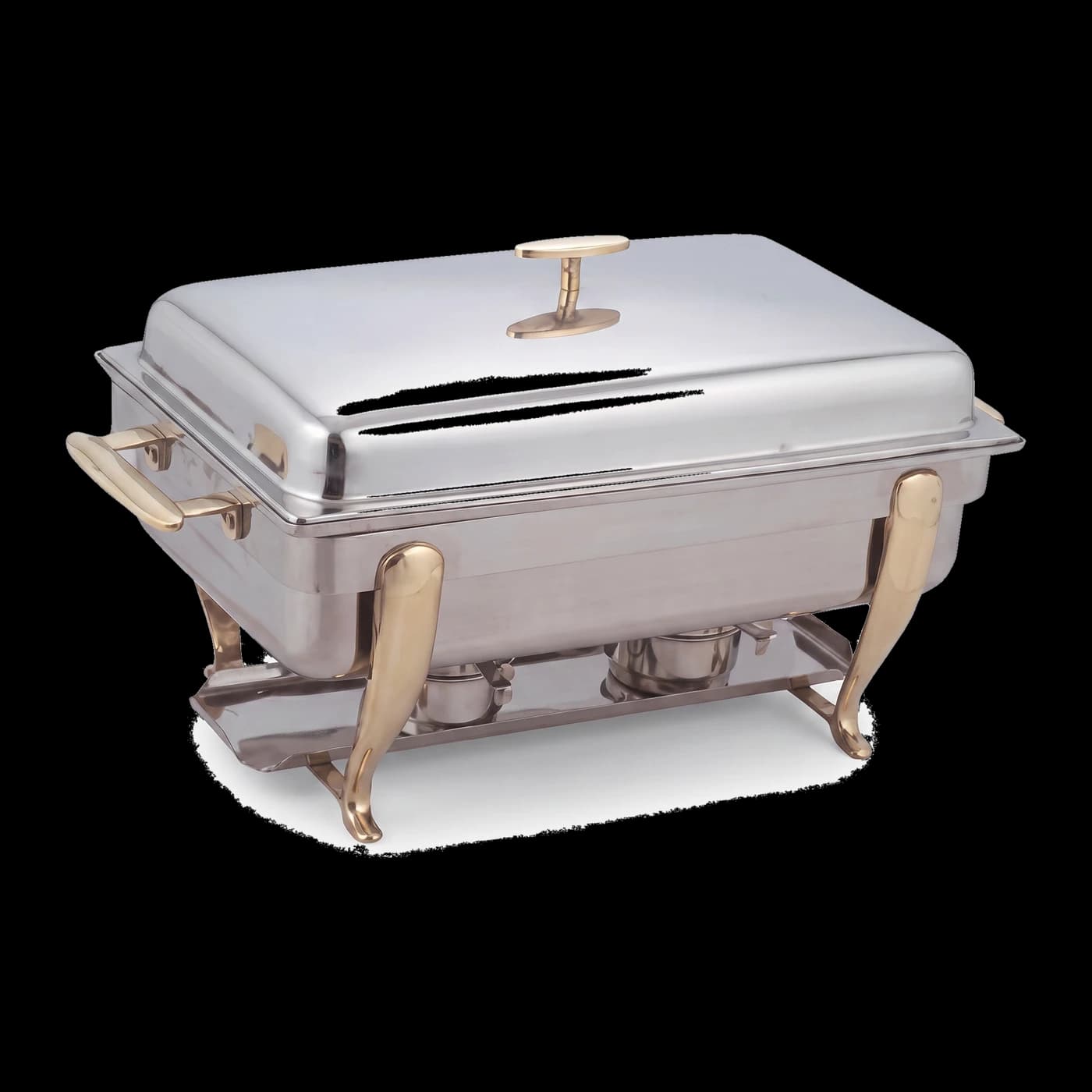
If you are planning display alongside a full buffet refit, our hotel buffet setup guide covers station layout and equipment quantities, and our chafing dish guide goes into the hot-holding side of the line these display pieces sit alongside.
Buying Direct from a Manufacturer
Display pieces are where custom work has the most visible payoff — a revolving stand or tiered display made to match your property’s finish and branding reads very differently from one dropped in from a generic retail range. Buying directly from the manufacturer keeps custom sizing, finish and engraving within reach, and means a property can reorder matching pieces years later without a mismatch appearing on the table.
Lotus Metal Works has manufactured display and presentation hotelware in Pakistan since 1951, supplying hotels, restaurants and banqueting halls across the country.
Planning your buffet presentation?
Send us your room layout and service style, and we’ll suggest a display hierarchy with matching pieces — bulk pricing available.
Get in Touch