Ask most F&B managers which part of the breakfast buffet gets the most planning attention and the answer is the hot line. Ask which part generates the most complaints and the answer is almost always the tea and coffee station. It occupies perhaps a metre and a half of counter, it is the one station every single guest visits, and it is frequently specified last — with whatever urn happened to be in the store cupboard.
Why the Beverage Station Is the Pressure Point
Every other station on a buffet serves a subset of guests. Some skip the eggs, some skip the pastries, some walk past the cold cuts entirely. Nobody skips the tea and coffee. That alone makes it the highest-traffic metre of counter in the room, but the real problem is timing: beverage demand is not spread evenly across service. Guests take a hot drink when they sit down and another before they leave, which means the station gets hit twice by the same person, and both peaks cluster around the same thirty-minute window when the room fills.
The practical consequence is that a beverage station sized on average demand will queue badly at peak. This is the single most common sizing error we see, and it is worth planning around deliberately rather than discovering on a full Saturday.
Holding Temperature: The Number That Decides Everything
Most beverage station problems are temperature problems wearing a different hat. Tea that arrives lukewarm, coffee that tastes burnt by 9am, milk that has been sitting in the danger zone — these are all holding decisions rather than brewing decisions, and they are the difference between a station that works and one that generates comment cards.
- Black tea should be brewed near boiling but held and served at roughly 70–80 °C. Held much hotter for long periods and the brew continues extracting, turning bitter and stewed.
- Coffee holds best around 80–85 °C. Brewed coffee held on direct heat noticeably degrades after about thirty minutes, which is why batch size matters more than urn size.
- Milk is the one most often mishandled. It should be held either properly chilled below 5 °C or hot above 63 °C — never sitting at room temperature in a jug on the counter for a three-hour service.
- General hot-holding for food safety sits above 63 °C, so anything you are holding hot needs a heat source that genuinely sustains that, not one that merely slows the cooling.
That last point is where equipment choice actually bites. A vessel with no heat source is not holding at temperature — it is cooling at a controlled rate. Over a ninety-minute breakfast service that distinction becomes very obvious to the guest who arrives last.
Heat Sources: Spirit Lamp, Electric or Insulated
There are three practical approaches to keeping beverages at service temperature, and the right one depends far more on your service pattern than on your budget.
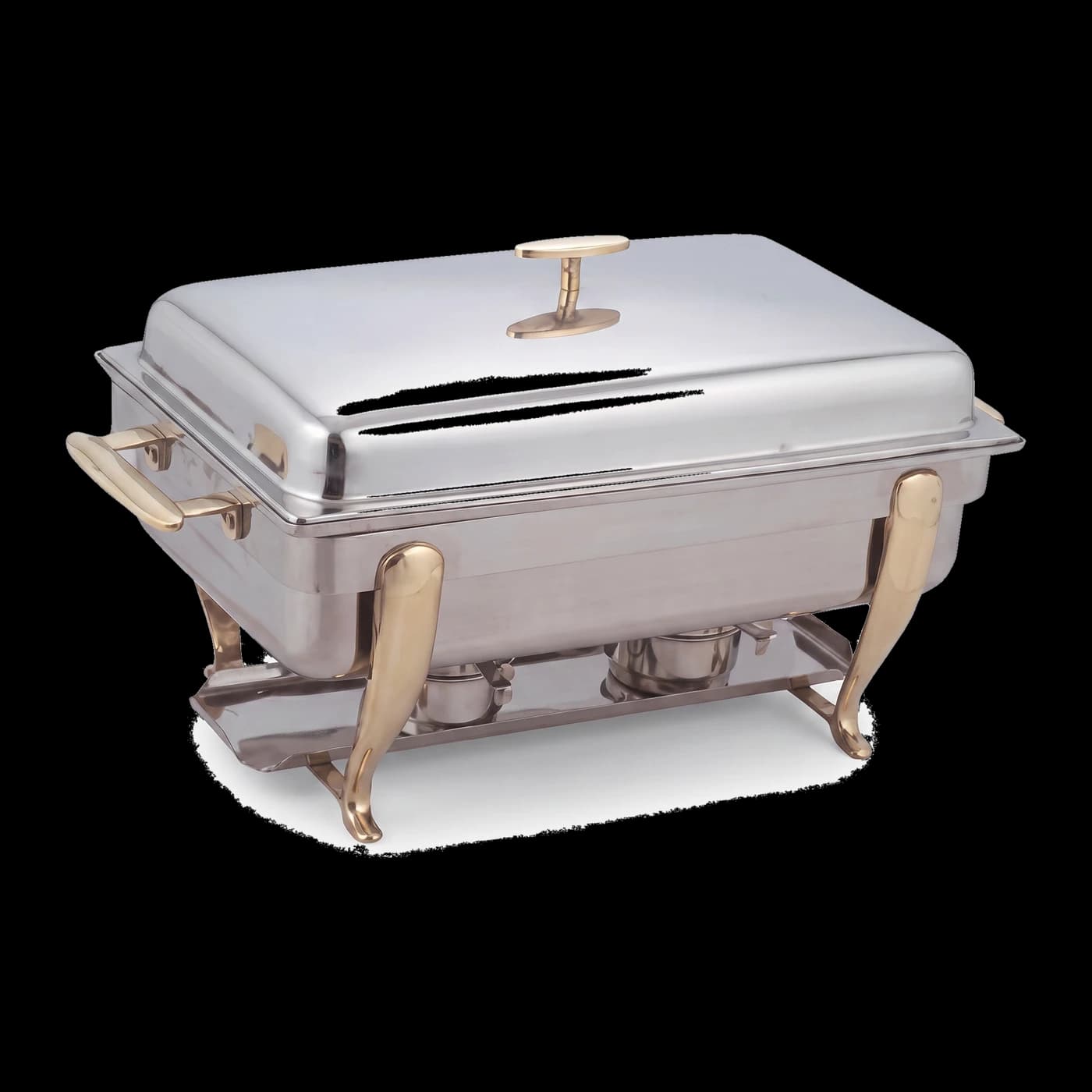
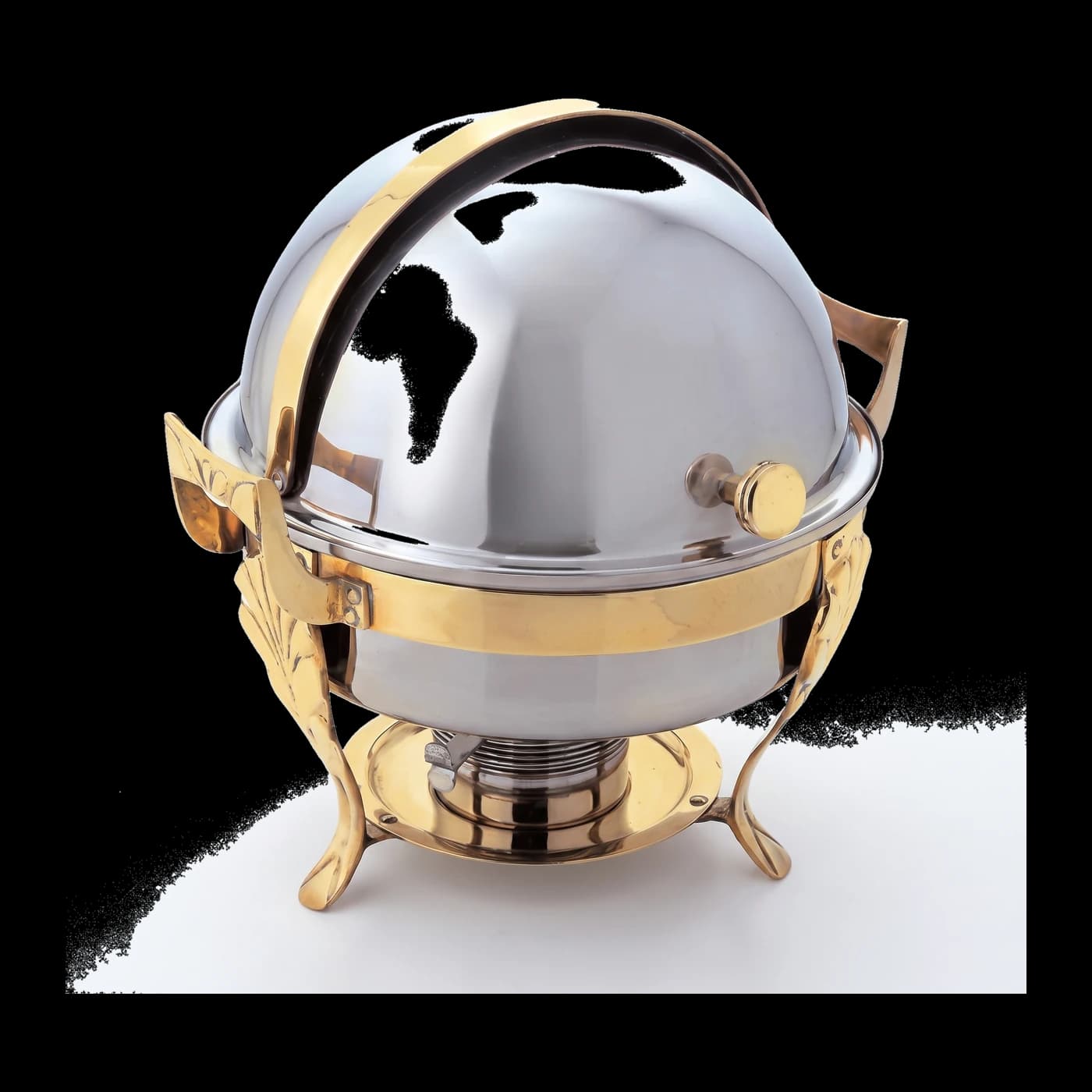
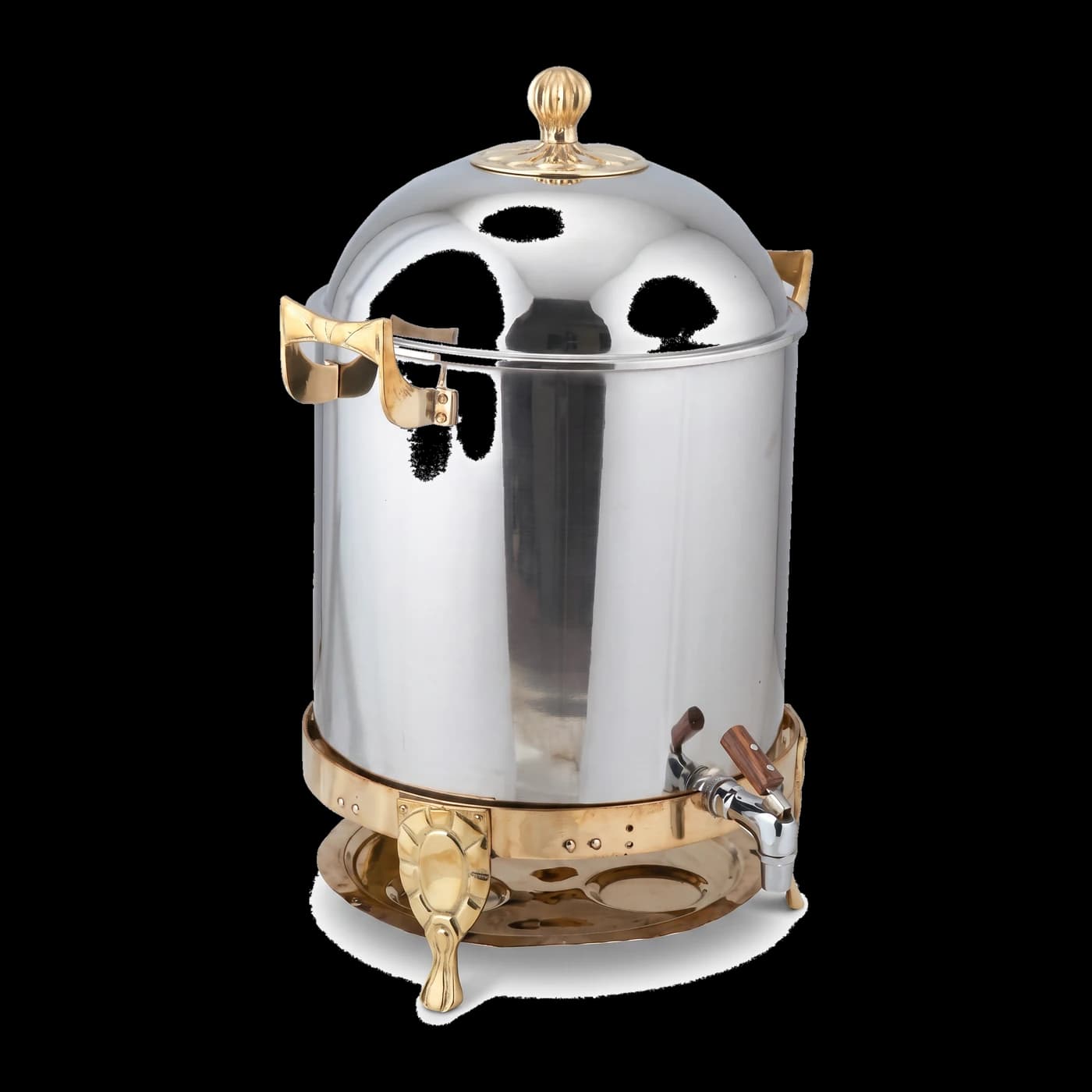
A spirit lamp setup — like our Tea Container with Spirit Lamp, a stainless steel pot on a brass stand over an open flame — holds temperature indefinitely without any electrical infrastructure. That independence is the point: it works in a lobby lounge, on a lawn, at an outdoor wedding, or anywhere a power outlet is inconvenient or unavailable. It also looks like hospitality in a way a plastic-handled electric urn does not, which matters on a station guests stand directly in front of.
An electric urn gives you thermostatic control and larger capacity, which suits a high-volume breakfast room with a reliable power supply and a fixed layout. The trade-off is flexibility — it ties the station to an outlet and to a location.
An insulated or vacuum vessel holds without any heat source at all, which makes it ideal for coffee specifically, since it avoids the continued cooking that causes the burnt taste on urns held over heat. The limitation is that it holds for a window rather than indefinitely.
Most properties that get this right end up running a combination: spirit-lamp containers for tea and hot milk, insulated vessels for brewed coffee, refreshed in batches. Trying to solve everything with one format is usually what produces the compromise nobody likes.
Sizing for Your Cover Count
A reasonable planning figure for a hotel breakfast is around two hot drinks per guest across the service — one on arrival, one before leaving. What matters more than the total, though, is the peak: a substantial share of your covers will arrive inside one busy half-hour, and the station has to absorb that without a queue forming.
Two rules of thumb we give procurement teams:
- Size vessels for the peak window, not the whole service. Work out how many drinks you need to serve in your busiest thirty minutes and make sure the station can deliver that without waiting for a refill.
- Run two smaller vessels rather than one large one for each beverage. A single large urn means the whole station stops when it needs refilling or when the coffee in it goes past its window. Two smaller vessels let you rotate — refresh one while the other serves — and they also give you a second dispensing point, which halves the queue at the exact moment it matters.
The second point is the one that consistently surprises people. The instinct is to buy capacity; the fix is usually to buy dispensing points.
Chai Service and the South Asian Breakfast
A station designed around Western tea and coffee service does not cover a Pakistani or South Asian breakfast properly, and this is where imported equipment lists tend to fall short. Chai is brewed with the milk rather than served alongside it, which means it needs its own held vessel at serving temperature rather than a pot of black tea and a jug of milk sitting next to each other.
If your property serves a mixed guest profile — which most hotels in Pakistan do — the station realistically needs three held beverages rather than two: black tea, prepared chai, and coffee, with hot and cold milk available separately for the black tea drinkers. Our Copper Serving Pots work well for the chai side of this, both because copper carries the traditional association guests expect and because it presents properly on a station where the equipment is fully visible.
You can see the full range of held beverage equipment on our beverage service category page.
Layout: Flow, and the Condiment Problem
Once the equipment is right, most remaining queueing is caused by layout. Three principles cover the majority of it:
- Cups before pots. A guest who reaches the urn before they have a cup has to step back against the flow, which is what turns a moving line into a stationary cluster.
- Condiments off the main line. Sugar, sweetener, milk, lemon and stirrers are where people linger — they open sachets, they stir, they think. If those sit in the same line as the dispensing point, every slow guest blocks every fast one. Put them on a separate adjacent surface and the line keeps moving.
- Never against a wall at peak. A station accessible from both sides has twice the effective frontage. If the room allows it, an island beats a wall run for exactly the thirty minutes that matter.
A stainless steel serving trayalso earns its place here — not for the buffet itself, but for the staff member clearing used cups and running fresh ones out from the back. That circulation is part of the station’s throughput, and it is usually the thing that has been left off the equipment list entirely.
For the wider room — station placement, equipment quantities and heat zones across the whole buffet — our hotel buffet setup guide covers the layout question in full.
Materials, Staining and Daily Cleaning
Beverage equipment takes a specific kind of abuse that hot food equipment does not: tannin. Tea leaves a brown film on stainless steel that ordinary washing-up does not remove, and once it builds up it affects the taste of everything brewed in that vessel afterwards. Any vessel used for tea needs a periodic descale and tannin strip on a schedule, not just a rinse between services.
This is also a reason to be specific about steel grade on beverage equipment. Grade 304 (18/10) resists both the corrosion and the staining considerably better than the cheaper 201 alloy that turns up in budget urns — our guide to stainless steel grades explains what the numbers mean and how to spot low-grade steel before it starts pitting. Copper pieces on the station need their own routine, which our copper hotelware care guide covers in detail.
Buying Direct from a Manufacturer
Beverage equipment sits directly in front of guests for the entire service, which puts it in the same category as your display pieces rather than your back-of-house kit — finish and consistency are visible in a way they are not on a stock pot. Buying directly from the manufacturer means a station can be specified as a matching set rather than assembled from whatever was available, and it means a property can reorder a replacement pot years later without an obvious mismatch appearing on the counter.
Lotus Metal Works has manufactured beverage and buffet service equipment in Pakistan since 1951, supplying hotels, restaurants and banqueting halls across the country with custom sizing, finishes and engraving on request.
Planning a beverage station?
Tell us your cover count and service pattern, and we’ll suggest vessel sizes and a station layout that holds up at peak — bulk pricing available.
Get in Touch